

As a lover of literature and the arts, the human experience is an invigorating enigma to dissect in trying to understand “what life means.” With that being said, in the simplest terms, I believe the idea of life is well embodied by the discography of the love of my life, Mitski. Mitski is an artist who has been labeled as a “quintessential-sad-girl” musician. Now, although her music is melancholic and depressive, it is angsty, hopeful, sensual, yearning, and imaginative. It is through her music that listeners can appreciate life in its purest form, because how does one navigate life if not through the mobility of one’s challenges (internal and external)?
With that being said, February 27, 2026, marked the release of Mitski’s eighth studio album, Nothing’s About to Happen to Me. This album was teased with various collaborations, an intimate tour release, and two singles: “Where’s My Phone” and “I’ll Change For You.” Overall, this album is, in the singer-songwriter’s own words, “pathetic.” This project dives through the internal troubles of anxiously yearning and wishing for any form of connection, whether that means crying about it, changing oneself, and ruminating on regrets… It is ok to be pathetic. Mitski emphasized in an interview that her intention with this project was to dive into the most miserable aspects of life and love, and tell her audience that it is okay to be miserable. We live in a time where we are expected to be fine with independence disguised by loneliness, but it is truly and perfectly valid to not want to be alone and do some crazy stuff.
Even though this album only has a duration of 34 minutes, this is Mitski’s longest album… Nevertheless, this is 34 minutes of literary allegories, anguished cries, and experimental melodies, so what else could I ask for? Looking at track one, “In a Lake,” I saw this as a folky twangy sister song to “Brand New City.” This song details the reminiscing of the past as it slowly bleeds into a wish for escape from this “small city.” This track’s melody, filled with various acoustics, felt like walking through the Canterbury Tales, or for those who don’t know Chaucer, it felt like listening to a medieval story. Regardless, this song ends with a beautifully short climax of loud guitars accompanied by Mitski’s assurance that you will make it to this big city.

The second track on this album is the leading single “Where’s My Phone,” which I already wrote about in January's Fresh Picks (read it). So I won’t go into too much detail about this track; however, in the overall picture alongside the other tracks, the hysteria of this song is not like the hysteria of “I’ll Change for You” or “Dead Woman,” which I thought was interesting, but again, mental spirals come in so many different forms! With that being said, that leads us to “Cats.” I love cats, and I love this song so much. As many online forums (cough, cough, Reddit) understand, this song outlines the unrequited love of a failing relationship. As the protagonist begins to realize this impending doom and her partner begins to detach themself from her, both are in a situation where they don’t want to leave each other out of normalcy, but they totally understand if their respective partner leaves. The chorus sings of the comfort of seeing their two cats, who sleep by the singer, offering her not just companionship as pets but a reminder that, as living beings, we all need connection. The motif of connection, especially in this song, as Mitski sings quietly with nigh-stripped melodies, was ironically intimate yet isolating—a feeling that pervades this album.
Track 4, “If I leave,” is like a sequel to “Cats,” detailing a soon-to-be-failed relationship and its hypothetical aftermath. This track really starts to bleed into that patheticness Mitski previously mentioned. She begins singing about the anxiety of not being able to find someone who will tolerate her as her partner could. However, this is an anxiety that she can only hold to herself; she can not even voice this to her friends, and by bottling up her insecurities, she is led into a spiral of confusion. As the song progresses from its monotonous ponderings, it climaxes to a rocky-muddy, “Geyser”-like melody as Mitski cries that she is riding through a tunnel and it is dark the whole way, underlining her existential outburst of not knowing what to do and how to feel. The song concludes by returning to the slow melodies and whispering her reliance on her partner, concluding that even though the relationship is failing, she will probably not break things off.
The next track, “Dead Women,” blatantly calls out the romanticized idea of a dead woman. I love this track for its rebellion and use of excess in its lyrics to highlight how the patriarchy loves the tragic, depressed damsel. The Ophelia complex, manic-pixie dream girls, etc.—there are so many archetypes that are used to categorize and flatten female identities. However, women are not empty canvases that are waiting to be used by tortured male artists, and Mitski makes that clear. The haunting melodies complement Mitski as she sings of the image of a dead woman, being portrayed by the male gaze, the weak woman who “could not be saved.” This song reclaims the female identity, restructuring it as something that pushes for survivance and autonomy in a society where women are shaped by the men who lead it and take advantage of it.

Following “Dead Women” is one of my favorites from the album, “Instead of Here.” This song is very much up for interpretation. I do not want to give my personal thoughts on this song, but I will talk about my love for the melody of this track. This ballad offers a simple yet comforting melody that, upon listening to, literally felt like Mitski was singing in front of me. Just a bit into my appreciation of the lyrics, despite how depressive they may be, the lines, “So excuse me, I'll be opening my box / Of old friend misery, my secret treat / To feel like myself again,” were excruciatingly beautiful and uncomfortably warm. Once again, there are times where desperation trumps rationality, and Mitski highlights this choice because moving forward is still movement, even if the means to move are not “the best.”
Track 7, the second single released in this project, “I’ll Change For You,” which, as mentioned previously, is very different from “Where’s My Phone.” This song is bubbly and whimsical in the loosest sense. Akin to many of the other songs on this album, the melody is very stripped and almost lo-fi. The lyrics themselves are raw and desperate, again, outlining the irrational need for a connection that is deterring one from internal healing. Specifically, an improvement that they fully recognize, but still choose to attach themselves to someone they shouldn’t. Something about hearing Mitski cry, “I’ll do anything / for you to love me again”—she is so vulnerable and a reflection of many. Moving on to track 8, “Rules”... I want to preface by saying that, up until now, I have written over 1000 words about how much I love this album; it is truly a beautiful collection. However, this song is definitely not my favorite… It felt like an interlude where Mitski counts and details how she will be the perfect lover, even though she knows she can never be that. I think it is hard to truly appreciate this track with the amount of brain-rotted people on the internet laughing about Mitski saying “six-seven.” Regardless, this is not a bad track, but I personally do not think it shines as brightly as the other parts of this album.

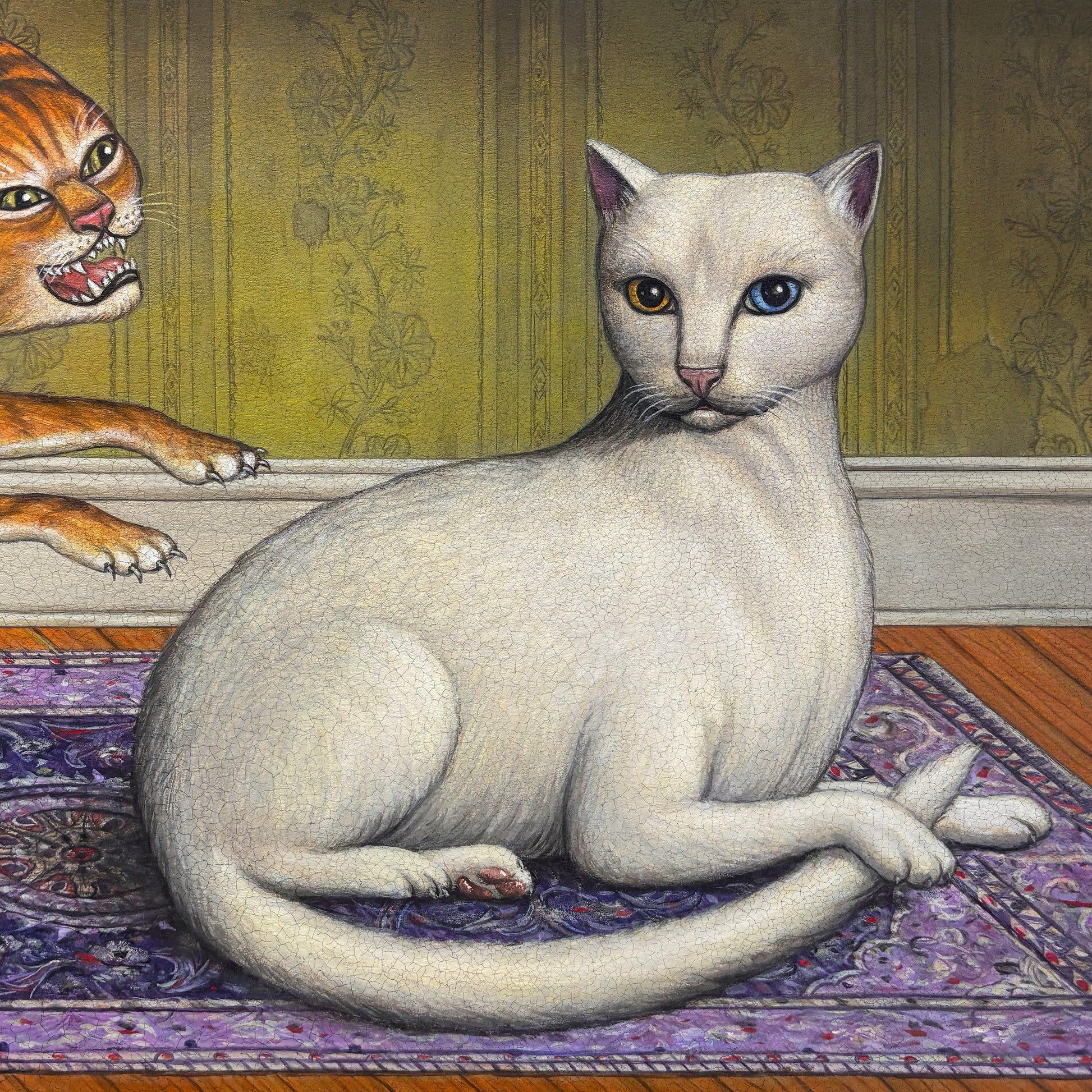
The ninth track, “That White Cat,” switches up the genre a bit from indie-lofi-rock to a bit more western country—a melody that reminds me of Mitski’s single “Cop Car.” Lyrically, this song epitomizes the loss of autonomy and sanity. Beginning with the absurd idea of losing your house to your cat, then progressively realizing that the protagonist has lost her life to those around her who use and exploit her. The mix of her monotonous harmonies with the steady drums, snares, and low bass evokes the impending doom of living for others—human and non-human—rather than yourself. In contrast to this song, “Charon’s Obol,” the second-to-last song, is soft and melodic, returning to the folky twang of previous songs. As a more rational and introspective reflection on the hysteria of the protagonist’s cycles of abuse and exploitation, this song takes a breather to understand who the protagonist is. The motif of the house in this album, or story, serves as a physical metaphor for being trapped. Recognizing this role, the protagonist takes it upon herself, in true gothic melodramatic fashion, to repeat this cycle. Just as the house will continue to trap women yearning for a new life, society uses dreaming women for its gain, stripping them of their ambitions and flattening them to a coin, or a charon’s obol.
Last but not least, my favorite song on this album is “Lightning.” It is obvious that themes of death circulate in this project, and this theme pervades this less than 3-minute track. However, there is something cathartic about ruminating on the chances of death and turning these thoughts into hopes to be something else, to be “born again”. The melodic setup of the song plays with monotonous singing and declining scales, and sets up a neurotic and rocky crashout during the bridge. Even with its four short lines, this track’s bridge made such an impression on me. Lyrics of “If I'm dark, all the better / To reflect the moonlight / If I mourn, all the better / To behold the sunrise,” reminds me of one of my favorite poems “Ode on Melancholy” by John Keats, which shapes the idea of sadness and happiness as two sides of the same coin: because how do we know happiness if not for sadness? Similarly, how can we appreciate the moonlight if we do not know the darkness, or how can we be proud of ourselves for making it to another day if not for the mourning of the past? Accompanying such powerful lyrics, Mitski sings alongside potent and beautifully noisy instrumentals, quickly returning to her slow, simple melodies and finishing her song with an anticipation of death, not in a “I want to die” way, but in a “I am friends with her” way.
With all that being said, this project, album, story, whatever you interpret it as, is a complex and nuanced take on life, especially for those who are not men. Filled with connections to films like Possession and books like The Yellow Wallpaper, when Mitski releases, I can't help but enjoy and appreciate the amount of effort people put into understanding her work. Once again, showing how we all yearn for connection.